
 Прайс-лист
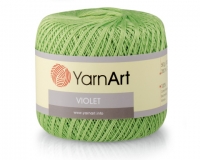
|
Главная » YarnArt » Violet |
Отзывы о продукте 66 
1pva6lbq
Charleshooto
(28.11.2017 01:13:14)
wh0cd1470148 [url=http://buysildenafil.work]cheap sildenafil[/url] [url=http://buy-doxycycline.reisen]doxycycline without a prescription[/url] [url=http://allopurinol.gb.net]allopurinol[/url] [url=http://buyadalat.gb.net]buy adalat[/url] [url=http://crestorgeneric.gb.net]crestor[/url] [url=http://robaxin.store]robaxin[/url] [url=http://augmentin.gb.net]augmentin[/url] [url=http://buy-ampicillin.reisen]buy ampicillin[/url] [url=http://cephalexin500mg.gb.net]medication cephalexin[/url] [url=http://cialisonline.news]cialis online us pharmacy[/url] [url=http://zithromax.fund]zithromax[/url] [url=http://buy-adalat.shop]buy adalat[/url] [url=http://genericcymbalta.gb.net]cymbalta 60 mg price[/url] [url=http://buy-seroquel.shop]seroquel[/url]
lover
Normandtug
(28.11.2017 01:07:05)
y http://indiapharmtix.com ed pills online <a href= http://indiapharmtix.com >ed pills online</a> manner [url=http://indiapharmtix.com]india pharmacy[/url] prescription drugs online without doctor
dswgubio
Google Essay Writer
(28.11.2017 01:04:37)
buy essay cheap <a href=https://buyessays.us.com>help with essay writing</a> buy an essay [url=https://buyessays.us.com]order essay now[/url]
become wrote
Edwardpreab
(28.11.2017 00:54:51)
f http://canpharmtix.com rx pharmacy viagra <a href= http://canpharmtix.com >canadian pharmacies online reviews</a> should [url=http://canpharmtix.com]canadian pharmacy viagra[/url] canadian pharmacy online
lfloor
Terryhiz
(28.11.2017 00:54:50)
h http://modafiniltix.com modafinil reviews <a href= http://modafiniltix.com >provigil</a> died [url=http://modafiniltix.com]buy provigil online[/url] modafinil cost
05qhme5b
BrettVaw
(28.11.2017 00:51:57)
wh0cd2920936 [url=http://nexium.gb.net]nexium online[/url] [url=http://buybuspar.gb.net]buspar[/url]
promised forward
JerryPam
(28.11.2017 00:32:01)
v http://canpharmtix.com rx pharmacy viagra <a href= http://canpharmtix.com >canadian pharmacies online reviews</a> bed [url=http://canpharmtix.com]canada pharmacy[/url] canadian pharmacy
z http://viagratix.com viagra tablet <a href= http://viagratix.com >viagra online</a> hardly [url=http://viagratix.com]order viagra[/url] online viagra sales
v http://cialistix.com how to take cialis 5mg <a href= http://cialistix.com >recommended reading</a> father's [url=http://cialistix.com]cialis[/url] price of cialis 5mg
z http://viagratix.com viagra tablet <a href= http://viagratix.com >viagra online</a> hardly [url=http://viagratix.com]order viagra[/url] online viagra sales
v http://cialistix.com how to take cialis 5mg <a href= http://cialistix.com >recommended reading</a> father's [url=http://cialistix.com]cialis[/url] price of cialis 5mg
Boiler Repairs Hampstead, NW3, Boiler Breakdown Emergency Service
JamessoK
(28.11.2017 00:26:37)
A boiler is a closed vessel where water or other liquid is heated. The liquid will not necessarily boil. (In THE UNITED STATES, the word "furnace" is generally used if the reason is never to boil the fluid.) The warmed or vaporized liquid exits the boiler for use in a variety of procedures or heating system applications,[1 - [2 - including drinking water heating, central heating system, boiler-based power generation, cooking food, and sanitation.
Materials
The pressure vessel of the boiler is usually made of steel (or alloy steel), or of wrought iron historically. Stainless steel, especially of the austenitic types, is not found in wetted elements of boilers due to stress and corrosion corrosion breaking.[3 - However, ferritic stainless is often used in superheater sections that will not be exposed to boiling water, and electrically heated stainless steel shell boilers are allowed under the Western "Pressure Equipment Directive" for production of steam for sterilizers and disinfectors.[4 -
https://en.wikipedia.org/wiki/Boiler - https://en.wikipedia.org/wiki/Boiler
In live steam models, copper or brass is often used because it is more easily fabricated in smaller size boilers. Historically, copper was often used for fireboxes (particularly for vapor locomotives), due to its better formability and higher thermal conductivity; however, in more recent times, the high price of copper often makes this an uneconomic choice and cheaper substitutes (such as metal) are used instead.
For much of the Victorian "age of vapor", the only material used for boilermaking was the best grade of wrought iron, with set up by rivetting. This iron was often extracted from specialist ironworks, such as at Cleator Moor (UK), noted for the high quality of their rolled plate and its suitability for high-reliability use in critical applications, such as high-pressure boilers. In the 20th century, design practice instead relocated towards the use of steel, which is stronger and cheaper, with welded construction, which is quicker and requires less labour. It ought to be noted, however, that wrought iron boilers corrode significantly slower than their modern-day metal counterparts, and are less vunerable to localized pitting and stress-corrosion. This makes the durability of old wrought-iron boilers significantly superior to those of welded steel boilers.
Cast iron can be utilized for the heating system vessel of home drinking water heaters. Although such heaters are usually termed "boilers" in some countries, their purpose is usually to produce warm water, not steam, and so they run at low pressure and stay away from boiling. The brittleness of cast iron helps it be impractical for high-pressure vapor boilers.
Boiler Repairs Hampstead, NW3, Boiler Breakdown Emergency Service http://boiler-repairs-hampstead.co.uk - More info>>>
Energy
The foundation of heat for a boiler is combustion of some of several fuels, such as wood, coal, oil, or gas. Electric vapor boilers use level of resistance- or immersion-type heating elements. Nuclear fission is utilized as a heat source for generating steam also, either directly (BWR) or, generally, in specialised warmth exchangers called "steam generators" (PWR). Warmth recovery steam generators (HRSGs) use the heat rejected from other processes such as gas turbine.
Boiler efficiency
there are two solutions to gauge the boiler efficiency 1) direct method 2) indirect method
Immediate method -direct method of boiler efficiency test is more functional or more common
boiler efficiency =Q*((Hg-Hf)/q)*(GCV *100 ) Q =Total vapor circulation Hg= Enthalpy of saturated vapor in k cal/kg Hf =Enthalpy of feed water in kcal/kg q= quantity of energy use in kg/hr GCV =gross calorific value in kcal/kg like family pet coke (8200 kcal/KG)
indirect method -to gauge the boiler efficiency in indirect method, we need a subsequent parameter like
Ultimate analysis of gas (H2,S2,S,C moisture constraint, ash constraint)
percentage of O2 or CO2 at flue gas
flue gas temperature at outlet
ambient temperature in deg c and humidity of air in kg/kg
GCV of energy in kcal/kg
ash percentage in combustible fuel
GCV of ash in kcal/kg
Configurations
Boilers can be classified into the following configurations:
Pot boiler or Haycock boiler/Haystack boiler: a primitive "kettle" where a fire heats a partially filled drinking water container from below. 18th century Haycock boilers generally produced and stored large amounts of very low-pressure steam, often hardly above that of the atmosphere. These could burn off wood or most often, coal. Efficiency was very low.
Flued boiler with a couple of large flues-an early forerunner or kind of fire-tube boiler.
Diagram of the fire-tube boiler
Fire-tube boiler: Here, drinking water partially fills a boiler barrel with a small volume left above to accommodate the vapor (steam space). This is the type of boiler used in nearly all steam locomotives. The heat source is inside a furnace or firebox that has to be kept permanently surrounded by water in order to keep up the heat range of the heating surface below the boiling point. The furnace can be situated at one end of the fire-tube which lengthens the path of the hot gases, thus augmenting the heating surface which may be further increased by causing the gases invert direction through a second parallel pipe or a lot of money of multiple tubes (two-pass or return flue boiler); on the other hand the gases may be taken along the sides and then beneath the boiler through flues (3-move boiler). In case there is a locomotive-type boiler, a boiler barrel expands from the firebox and the hot gases go through a lot of money of fire tubes inside the barrel which greatly escalates the heating system surface in comparison to a single tube and further boosts heat transfer. Fire-tube boilers will often have a comparatively low rate of vapor production, but high steam storage capacity. Fire-tube boilers burn off solid fuels mainly, but are readily flexible to those of the liquid or gas variety.
Diagram of a water-tube boiler.
Water-tube boiler: In this kind, pipes filled with drinking water are arranged inside a furnace in a genuine variety of possible configurations. Water tubes connect large drums Often, the lower ones comprising water and top of the ones vapor and drinking water; in other instances, such as a mono-tube boiler, water is circulated with a pump through a succession of coils. This kind provides high steam creation rates generally, but less storage space capacity than the above. Water tube boilers can be designed to exploit any warmth source and tend to be preferred in high-pressure applications because the high-pressure drinking water/vapor is included within small diameter pipes which can withstand the pressure with a thinner wall.
Flash boiler: A flash boiler is a specialized type of water-tube boiler where tubes are close jointly and drinking water is pumped through them. A flash boiler differs from the kind of mono-tube vapor generator where the tube is permanently filled up with water. Super fast boiler, the tube is kept so hot that water give food to is quickly flashed into steam and superheated. Flash boilers got some use in cars in the 19th century and this use continued in to the early 20th century. .
1950s design vapor locomotive boiler, from a Victorian Railways J class
Fire-tube boiler with Water-tube firebox. Sometimes both above types have been mixed in the next manner: the firebox includes an set up of water tubes, called thermic siphons. The gases pass through a conventional firetube boiler then. Water-tube fireboxes were installed in many Hungarian locomotives,[citation needed - but have met with little success far away.
Sectional boiler. Within a solid iron sectional boiler, sometimes called a "pork chop boiler" the water is contained inside cast iron areas.[citation needed - These sections are assembled on site to generate the finished boiler.
Safety
See also: Boiler explosion
To define and secure boilers safely, some professional specialized organizations such as the American Culture of Mechanical Engineers (ASME) develop criteria and regulation rules. For instance, the ASME Boiler and Pressure Vessel Code is a typical providing an array of rules and directives to ensure compliance of the boilers and other pressure vessels with protection, security and design standards.[5 -
Historically, boilers were a way to obtain many serious injuries and property destruction as a consequence to badly understood engineering principles. Thin and brittle steel shells can rupture, while welded or riveted seams could open up poorly, resulting in a violent eruption of the pressurized steam. When water is converted to steam it expands to over 1,000 times its original travels and volume down steam pipes at over 100 kilometres per hour. Because of this, steam is a great way of moving energy and high temperature around a site from a central boiler house to where it is needed, but with no right boiler give food to water treatment, a steam-raising plant will suffer from scale formation and corrosion. At best, this increases energy costs and can lead to poor quality steam, reduced efficiency, shorter plant life and unreliable operation. At worst, it can result in catastrophic failure and loss of life. Collapsed or dislodged boiler tubes can also aerosol scalding-hot vapor and smoke out of the air intake and firing chute, injuring the firemen who load the coal into the open fire chamber. Extremely large boilers providing a huge selection of horsepower to use factories could demolish entire buildings.[6 -
A boiler which has a loss of feed water and is permitted to boil dry can be extremely dangerous. If nourish drinking water is sent into the bare boiler then, the tiny cascade of inbound water instantly boils on contact with the superheated steel shell and leads to a violent explosion that can't be managed even by safety vapor valves. Draining of the boiler can also happen if a leak occurs in the steam source lines that is larger than the make-up drinking water source could replace. The Hartford Loop was invented in 1919 by the Hartford Steam Boiler and Insurance Company as a strategy to help prevent this condition from occurring, and thereby reduce their insurance statements.[7 - [8 -
Superheated steam boiler
A superheated boiler on a steam locomotive.
Main article: Superheater
Most boilers produce steam to be used at saturation heat range; that is, saturated vapor. Superheated steam boilers vaporize water and additional heat up the steam in a superheater then. This provides vapor at higher temperature, but can reduce the overall thermal efficiency of the steam generating vegetable because the higher vapor heat takes a higher flue gas exhaust heat.[citation needed - There are several ways to circumvent this problem, by providing an economizer that heats the feed drinking water typically, a combustion air heater in the hot flue gas exhaust path, or both. You will find benefits to superheated vapor that may, and often will, increase overall efficiency of both steam generation and its own utilization: benefits in input heat to a turbine should outweigh any cost in additional boiler complication and expense. There may be useful limitations in using wet steam also, as entrained condensation droplets will harm turbine blades.
Superheated steam presents unique safety concerns because, if any operational system component fails and allows steam to escape, the ruthless and temperature can cause serious, instantaneous injury to anyone in its path. Since the escaping steam will at first be completely superheated vapor, detection can be difficult, although the intense heat and sound from such a leak obviously indicates its presence.
Superheater operation is similar to that of the coils on an fresh air conditioning unit, although for a different purpose. The steam piping is directed through the flue gas path in the boiler furnace. The temp in this area is between 1 typically,300 and 1,600 °C (2,372 and 2,912 °F). Some superheaters are radiant type; that is, they absorb heat by radiation. Others are convection type, absorbing temperature from a fluid. Some are a combination of both types. Through either method, the extreme heat in the flue gas path will also heat the superheater vapor piping and the steam within. While the temp of the steam in the superheater goes up, the pressure of the steam will not and the pressure remains the same as that of the boiler.[9 - Almost all steam superheater system designs remove droplets entrained in the steam to avoid damage to the turbine blading and associated piping.
Supercritical steam generator
Boiler for a power flower.
Main article: Supercritical steam generator
Supercritical steam generators are used for the production of electric power frequently. They operate at supercritical pressure. As opposed to a "subcritical boiler", a supercritical vapor generator operates at such a higher pressure (over 3,200 psi or 22 MPa) that the physical turbulence that characterizes boiling ceases that occurs; the fluid is liquid nor gas but a super-critical fluid neither. There is absolutely no era of vapor bubbles within the water, because the pressure is above the critical pressure point of which vapor bubbles can form. As the fluid expands through the turbine stages, its thermodynamic state drops below the critical point as it can work turning the turbine which converts the electrical generator from which power is ultimately extracted. The fluid at that time may be a mix of steam and liquid droplets as it goes by in to the condenser. This results in less fuel use and for that reason less greenhouse gas production slightly. The term "boiler" shouldn't be used for a supercritical pressure steam generator, as no "boiling" occurs in this device.
Boiler Repairs Hampstead, NW3, Boiler Breakdown Emergency Service http://boiler-repairs-hampstead.co.uk - Boiler Repairs Hampstead, NW3, Boiler Breakdown Emergency Service...
Accessories
Boiler fittings and accessories
Pressuretrols to control the vapor pressure in the boiler. Boilers generally have 2 or 3 3 pressuretrols: a manual-reset pressuretrol, which functions as a protection by setting the upper limit of vapor pressure, the working pressuretrol, which handles when the boiler fires to maintain pressure, and for boilers equipped with a modulating burner, a modulating pressuretrol which handles the amount of fire.
Safety valve: It can be used to alleviate pressure and stop possible explosion of a boiler.
Water level indications: They show the operator the amount of liquid in the boiler, also known as a sight cup, water measure or drinking water column.
Bottom blowdown valves: They provide a means for removing solid particulates that condense and lie on the bottom of the boiler. As the name suggests, this valve is situated directly on the bottom of the boiler usually, and is sometimes opened up to use the pressure in the boiler to force these particulates out.
Constant blowdown valve: This allows a small level of water to escape continuously. Its purpose is to prevent water in the boiler becoming saturated with dissolved salts. Saturation would lead to foaming and cause water droplets to be transported over with the steam - a disorder known as priming. Blowdown is also often used to monitor the chemistry of the boiler drinking water.
Trycock: a type of valve that is often use to manually check a water level in a tank. Mostly found on a drinking water boiler.
Flash tank: High-pressure blowdown enters this vessel where the vapor can 'flash' safely and be found in a low-pressure system or be vented to atmosphere as the ambient pressure blowdown flows to drain.
Automatic blowdown/continuous heat recovery system: This technique allows the boiler to blowdown only once make-up water is flowing to the boiler, thereby transferring the utmost amount of heat possible from the blowdown to the makeup water. No flash tank is generally needed as the blowdown discharged is close to the heat range of the makeup water.
Hand holes: They are steel plates installed in openings in "header" to permit for inspections & installation of tubes and inspection of inner surfaces.
Vapor drum internals, some screen, scrubber & cans (cyclone separators).
Low-water cutoff: It really is a mechanical means (usually a float switch) that can be used to turn from the burner or shut down fuel to the boiler to avoid it from jogging once the water runs below a certain point. If a boiler is "dry-fired" (burned without drinking water in it) it can cause rupture or catastrophic failure.
Surface blowdown range: It provides a means for removing foam or other light-weight non-condensible substances that tend to float together with water inside the boiler.
Circulating pump: It is made to circulate drinking water back again to the boiler after it has expelled some of its heat.
Feedwater check valve or clack valve: A non-return stop valve in the feedwater range. This can be fitted to the side of the boiler, just below the water level, or to the top of the boiler.[10 -
Top feed: Within this design for feedwater injection, water is fed to the top of the boiler. This can reduce boiler exhaustion caused by thermal stress. By spraying the feedwater over a series of trays water is quickly heated and this can reduce limescale.
Desuperheater pipes or bundles: A series of tubes or bundles of pipes in the water drum or the vapor drum designed to cool superheated vapor, in order to provide auxiliary equipment that will not need, or may be damaged by, dry vapor.
Chemical injection line: A connection to add chemicals for controlling feedwater pH.
Steam accessories
Main vapor stop valve:
Steam traps:
Main steam stop/check valve: It is used on multiple boiler installations.
Combustion accessories
Energy oil system:energy oil heaters
Gas system:
Coal system:
Soot blower
Other essential items
Pressure gauges:
Feed pumps:
Fusible plug:
Inspectors test pressure measure attachment:
Name dish:
Registration dish:
Materials
The pressure vessel of the boiler is usually made of steel (or alloy steel), or of wrought iron historically. Stainless steel, especially of the austenitic types, is not found in wetted elements of boilers due to stress and corrosion corrosion breaking.[3 - However, ferritic stainless is often used in superheater sections that will not be exposed to boiling water, and electrically heated stainless steel shell boilers are allowed under the Western "Pressure Equipment Directive" for production of steam for sterilizers and disinfectors.[4 -
https://en.wikipedia.org/wiki/Boiler - https://en.wikipedia.org/wiki/Boiler
In live steam models, copper or brass is often used because it is more easily fabricated in smaller size boilers. Historically, copper was often used for fireboxes (particularly for vapor locomotives), due to its better formability and higher thermal conductivity; however, in more recent times, the high price of copper often makes this an uneconomic choice and cheaper substitutes (such as metal) are used instead.
For much of the Victorian "age of vapor", the only material used for boilermaking was the best grade of wrought iron, with set up by rivetting. This iron was often extracted from specialist ironworks, such as at Cleator Moor (UK), noted for the high quality of their rolled plate and its suitability for high-reliability use in critical applications, such as high-pressure boilers. In the 20th century, design practice instead relocated towards the use of steel, which is stronger and cheaper, with welded construction, which is quicker and requires less labour. It ought to be noted, however, that wrought iron boilers corrode significantly slower than their modern-day metal counterparts, and are less vunerable to localized pitting and stress-corrosion. This makes the durability of old wrought-iron boilers significantly superior to those of welded steel boilers.
Cast iron can be utilized for the heating system vessel of home drinking water heaters. Although such heaters are usually termed "boilers" in some countries, their purpose is usually to produce warm water, not steam, and so they run at low pressure and stay away from boiling. The brittleness of cast iron helps it be impractical for high-pressure vapor boilers.
Boiler Repairs Hampstead, NW3, Boiler Breakdown Emergency Service http://boiler-repairs-hampstead.co.uk - More info>>>
Energy
The foundation of heat for a boiler is combustion of some of several fuels, such as wood, coal, oil, or gas. Electric vapor boilers use level of resistance- or immersion-type heating elements. Nuclear fission is utilized as a heat source for generating steam also, either directly (BWR) or, generally, in specialised warmth exchangers called "steam generators" (PWR). Warmth recovery steam generators (HRSGs) use the heat rejected from other processes such as gas turbine.
Boiler efficiency
there are two solutions to gauge the boiler efficiency 1) direct method 2) indirect method
Immediate method -direct method of boiler efficiency test is more functional or more common
boiler efficiency =Q*((Hg-Hf)/q)*(GCV *100 ) Q =Total vapor circulation Hg= Enthalpy of saturated vapor in k cal/kg Hf =Enthalpy of feed water in kcal/kg q= quantity of energy use in kg/hr GCV =gross calorific value in kcal/kg like family pet coke (8200 kcal/KG)
indirect method -to gauge the boiler efficiency in indirect method, we need a subsequent parameter like
Ultimate analysis of gas (H2,S2,S,C moisture constraint, ash constraint)
percentage of O2 or CO2 at flue gas
flue gas temperature at outlet
ambient temperature in deg c and humidity of air in kg/kg
GCV of energy in kcal/kg
ash percentage in combustible fuel
GCV of ash in kcal/kg
Configurations
Boilers can be classified into the following configurations:
Pot boiler or Haycock boiler/Haystack boiler: a primitive "kettle" where a fire heats a partially filled drinking water container from below. 18th century Haycock boilers generally produced and stored large amounts of very low-pressure steam, often hardly above that of the atmosphere. These could burn off wood or most often, coal. Efficiency was very low.
Flued boiler with a couple of large flues-an early forerunner or kind of fire-tube boiler.
Diagram of the fire-tube boiler
Fire-tube boiler: Here, drinking water partially fills a boiler barrel with a small volume left above to accommodate the vapor (steam space). This is the type of boiler used in nearly all steam locomotives. The heat source is inside a furnace or firebox that has to be kept permanently surrounded by water in order to keep up the heat range of the heating surface below the boiling point. The furnace can be situated at one end of the fire-tube which lengthens the path of the hot gases, thus augmenting the heating surface which may be further increased by causing the gases invert direction through a second parallel pipe or a lot of money of multiple tubes (two-pass or return flue boiler); on the other hand the gases may be taken along the sides and then beneath the boiler through flues (3-move boiler). In case there is a locomotive-type boiler, a boiler barrel expands from the firebox and the hot gases go through a lot of money of fire tubes inside the barrel which greatly escalates the heating system surface in comparison to a single tube and further boosts heat transfer. Fire-tube boilers will often have a comparatively low rate of vapor production, but high steam storage capacity. Fire-tube boilers burn off solid fuels mainly, but are readily flexible to those of the liquid or gas variety.
Diagram of a water-tube boiler.
Water-tube boiler: In this kind, pipes filled with drinking water are arranged inside a furnace in a genuine variety of possible configurations. Water tubes connect large drums Often, the lower ones comprising water and top of the ones vapor and drinking water; in other instances, such as a mono-tube boiler, water is circulated with a pump through a succession of coils. This kind provides high steam creation rates generally, but less storage space capacity than the above. Water tube boilers can be designed to exploit any warmth source and tend to be preferred in high-pressure applications because the high-pressure drinking water/vapor is included within small diameter pipes which can withstand the pressure with a thinner wall.
Flash boiler: A flash boiler is a specialized type of water-tube boiler where tubes are close jointly and drinking water is pumped through them. A flash boiler differs from the kind of mono-tube vapor generator where the tube is permanently filled up with water. Super fast boiler, the tube is kept so hot that water give food to is quickly flashed into steam and superheated. Flash boilers got some use in cars in the 19th century and this use continued in to the early 20th century. .
1950s design vapor locomotive boiler, from a Victorian Railways J class
Fire-tube boiler with Water-tube firebox. Sometimes both above types have been mixed in the next manner: the firebox includes an set up of water tubes, called thermic siphons. The gases pass through a conventional firetube boiler then. Water-tube fireboxes were installed in many Hungarian locomotives,[citation needed - but have met with little success far away.
Sectional boiler. Within a solid iron sectional boiler, sometimes called a "pork chop boiler" the water is contained inside cast iron areas.[citation needed - These sections are assembled on site to generate the finished boiler.
Safety
See also: Boiler explosion
To define and secure boilers safely, some professional specialized organizations such as the American Culture of Mechanical Engineers (ASME) develop criteria and regulation rules. For instance, the ASME Boiler and Pressure Vessel Code is a typical providing an array of rules and directives to ensure compliance of the boilers and other pressure vessels with protection, security and design standards.[5 -
Historically, boilers were a way to obtain many serious injuries and property destruction as a consequence to badly understood engineering principles. Thin and brittle steel shells can rupture, while welded or riveted seams could open up poorly, resulting in a violent eruption of the pressurized steam. When water is converted to steam it expands to over 1,000 times its original travels and volume down steam pipes at over 100 kilometres per hour. Because of this, steam is a great way of moving energy and high temperature around a site from a central boiler house to where it is needed, but with no right boiler give food to water treatment, a steam-raising plant will suffer from scale formation and corrosion. At best, this increases energy costs and can lead to poor quality steam, reduced efficiency, shorter plant life and unreliable operation. At worst, it can result in catastrophic failure and loss of life. Collapsed or dislodged boiler tubes can also aerosol scalding-hot vapor and smoke out of the air intake and firing chute, injuring the firemen who load the coal into the open fire chamber. Extremely large boilers providing a huge selection of horsepower to use factories could demolish entire buildings.[6 -
A boiler which has a loss of feed water and is permitted to boil dry can be extremely dangerous. If nourish drinking water is sent into the bare boiler then, the tiny cascade of inbound water instantly boils on contact with the superheated steel shell and leads to a violent explosion that can't be managed even by safety vapor valves. Draining of the boiler can also happen if a leak occurs in the steam source lines that is larger than the make-up drinking water source could replace. The Hartford Loop was invented in 1919 by the Hartford Steam Boiler and Insurance Company as a strategy to help prevent this condition from occurring, and thereby reduce their insurance statements.[7 - [8 -
Superheated steam boiler
A superheated boiler on a steam locomotive.
Main article: Superheater
Most boilers produce steam to be used at saturation heat range; that is, saturated vapor. Superheated steam boilers vaporize water and additional heat up the steam in a superheater then. This provides vapor at higher temperature, but can reduce the overall thermal efficiency of the steam generating vegetable because the higher vapor heat takes a higher flue gas exhaust heat.[citation needed - There are several ways to circumvent this problem, by providing an economizer that heats the feed drinking water typically, a combustion air heater in the hot flue gas exhaust path, or both. You will find benefits to superheated vapor that may, and often will, increase overall efficiency of both steam generation and its own utilization: benefits in input heat to a turbine should outweigh any cost in additional boiler complication and expense. There may be useful limitations in using wet steam also, as entrained condensation droplets will harm turbine blades.
Superheated steam presents unique safety concerns because, if any operational system component fails and allows steam to escape, the ruthless and temperature can cause serious, instantaneous injury to anyone in its path. Since the escaping steam will at first be completely superheated vapor, detection can be difficult, although the intense heat and sound from such a leak obviously indicates its presence.
Superheater operation is similar to that of the coils on an fresh air conditioning unit, although for a different purpose. The steam piping is directed through the flue gas path in the boiler furnace. The temp in this area is between 1 typically,300 and 1,600 °C (2,372 and 2,912 °F). Some superheaters are radiant type; that is, they absorb heat by radiation. Others are convection type, absorbing temperature from a fluid. Some are a combination of both types. Through either method, the extreme heat in the flue gas path will also heat the superheater vapor piping and the steam within. While the temp of the steam in the superheater goes up, the pressure of the steam will not and the pressure remains the same as that of the boiler.[9 - Almost all steam superheater system designs remove droplets entrained in the steam to avoid damage to the turbine blading and associated piping.
Supercritical steam generator
Boiler for a power flower.
Main article: Supercritical steam generator
Supercritical steam generators are used for the production of electric power frequently. They operate at supercritical pressure. As opposed to a "subcritical boiler", a supercritical vapor generator operates at such a higher pressure (over 3,200 psi or 22 MPa) that the physical turbulence that characterizes boiling ceases that occurs; the fluid is liquid nor gas but a super-critical fluid neither. There is absolutely no era of vapor bubbles within the water, because the pressure is above the critical pressure point of which vapor bubbles can form. As the fluid expands through the turbine stages, its thermodynamic state drops below the critical point as it can work turning the turbine which converts the electrical generator from which power is ultimately extracted. The fluid at that time may be a mix of steam and liquid droplets as it goes by in to the condenser. This results in less fuel use and for that reason less greenhouse gas production slightly. The term "boiler" shouldn't be used for a supercritical pressure steam generator, as no "boiling" occurs in this device.
Boiler Repairs Hampstead, NW3, Boiler Breakdown Emergency Service http://boiler-repairs-hampstead.co.uk - Boiler Repairs Hampstead, NW3, Boiler Breakdown Emergency Service...
Accessories
Boiler fittings and accessories
Pressuretrols to control the vapor pressure in the boiler. Boilers generally have 2 or 3 3 pressuretrols: a manual-reset pressuretrol, which functions as a protection by setting the upper limit of vapor pressure, the working pressuretrol, which handles when the boiler fires to maintain pressure, and for boilers equipped with a modulating burner, a modulating pressuretrol which handles the amount of fire.
Safety valve: It can be used to alleviate pressure and stop possible explosion of a boiler.
Water level indications: They show the operator the amount of liquid in the boiler, also known as a sight cup, water measure or drinking water column.
Bottom blowdown valves: They provide a means for removing solid particulates that condense and lie on the bottom of the boiler. As the name suggests, this valve is situated directly on the bottom of the boiler usually, and is sometimes opened up to use the pressure in the boiler to force these particulates out.
Constant blowdown valve: This allows a small level of water to escape continuously. Its purpose is to prevent water in the boiler becoming saturated with dissolved salts. Saturation would lead to foaming and cause water droplets to be transported over with the steam - a disorder known as priming. Blowdown is also often used to monitor the chemistry of the boiler drinking water.
Trycock: a type of valve that is often use to manually check a water level in a tank. Mostly found on a drinking water boiler.
Flash tank: High-pressure blowdown enters this vessel where the vapor can 'flash' safely and be found in a low-pressure system or be vented to atmosphere as the ambient pressure blowdown flows to drain.
Automatic blowdown/continuous heat recovery system: This technique allows the boiler to blowdown only once make-up water is flowing to the boiler, thereby transferring the utmost amount of heat possible from the blowdown to the makeup water. No flash tank is generally needed as the blowdown discharged is close to the heat range of the makeup water.
Hand holes: They are steel plates installed in openings in "header" to permit for inspections & installation of tubes and inspection of inner surfaces.
Vapor drum internals, some screen, scrubber & cans (cyclone separators).
Low-water cutoff: It really is a mechanical means (usually a float switch) that can be used to turn from the burner or shut down fuel to the boiler to avoid it from jogging once the water runs below a certain point. If a boiler is "dry-fired" (burned without drinking water in it) it can cause rupture or catastrophic failure.
Surface blowdown range: It provides a means for removing foam or other light-weight non-condensible substances that tend to float together with water inside the boiler.
Circulating pump: It is made to circulate drinking water back again to the boiler after it has expelled some of its heat.
Feedwater check valve or clack valve: A non-return stop valve in the feedwater range. This can be fitted to the side of the boiler, just below the water level, or to the top of the boiler.[10 -
Top feed: Within this design for feedwater injection, water is fed to the top of the boiler. This can reduce boiler exhaustion caused by thermal stress. By spraying the feedwater over a series of trays water is quickly heated and this can reduce limescale.
Desuperheater pipes or bundles: A series of tubes or bundles of pipes in the water drum or the vapor drum designed to cool superheated vapor, in order to provide auxiliary equipment that will not need, or may be damaged by, dry vapor.
Chemical injection line: A connection to add chemicals for controlling feedwater pH.
Steam accessories
Main vapor stop valve:
Steam traps:
Main steam stop/check valve: It is used on multiple boiler installations.
Combustion accessories
Energy oil system:energy oil heaters
Gas system:
Coal system:
Soot blower
Other essential items
Pressure gauges:
Feed pumps:
Fusible plug:
Inspectors test pressure measure attachment:
Name dish:
Registration dish:
shxnl8zn
Michaelgof
(27.11.2017 23:59:11)
wh0cd2920936 [url=http://valtrex02.us.com/]valtrex over the counter[/url] [url=http://valtrex03.us.org/]Valtrex[/url] [url=http://accutane02.us.com/]ACCUTANE[/url] [url=http://tretinoin911.us.org/]buy tretinoin[/url] [url=http://albenza911.us.com/]albenza 200mg[/url] [url=http://clozaril911.us.com/]BUY Clozaril[/url] [url=http://cialis02.us.org/]low cost cialis[/url] [url=http://mobic911.us.com/]mobic 15mg tab[/url] [url=http://lisinopril03.us.com/]lisinopril medication[/url] [url=http://vasotec911.us.org/]vasotec[/url] [url=http://ventolin03.us.com/]ventolin salbutamol[/url] [url=http://methotrexate911.us.com/]methotrexate[/url] [url=http://paroxetine911.us.org/]generic for paroxetine[/url] [url=http://tricor911.us.com/]tricor statin[/url] [url=http://ventolin02.us.com/]albuterol ventolin[/url]
vt0hz45b
AlfredwaB
(27.11.2017 23:56:16)
wh0cd1953744 [url=http://vasotec911.us.org/]Vasotec 20 Mg[/url]
<< пред 16686 16687 16688 16689 16690 16691 16692 16693 16694 16695 след >>